Great teams are never built by accident. They are built on trust, clear purpose and the courage to have honest conversations. The right team building activities create all three.
The best team building activities build trust, sharpen communication and test a team under pressure, then finish with an honest debrief. Fun matters, but fun on its own is gone by Monday morning. Below are 11 team building activities we use with leadership teams and global organisations, grouped by what your team needs most.
Over almost 20 years at McNulty, we have worked with teams at organisations like Bank of Ireland, Bristol Myers Squibb and Amazon Web Services. The best teams we see are rarely the most talented on paper. They are the ones who trust each other, agree what they stand for and keep investing in how they work together.
Google found the same when it studied its own teams in Project Aristotle. The single biggest factor in team success was psychological safety – people feeling safe to speak up, take risks and admit mistakes. Every activity below is designed to grow it.
Trust and psychological safety
High performance is built on trust. Without it, people hold back their best ideas and hide their mistakes. With it, a team becomes capable of far more than it ever thought possible. These three activities give people permission to be honest with each other, the foundation of every high performing team.
- The Journey Line (60 minutes). Each person draws their life or career as a line on a page – peaks for the highs, dips for the lows – then talks their group through it in five minutes. The leader always goes first, and goes honestly. The moment a leader shares a low point, everybody else gets permission to do the same. This is where you start unlocking the leader within every person in the room.
- Working Styles Exchange (45 minutes). Each person answers three questions for the team: “When do I do my best work? What drains me? How do I like to receive feedback?” You will be amazed how much friction disappears once people understand each other’s wiring.
- The Appreciation Round (15 minutes). Go around the room. Each person names one specific thing a teammate did recently that made a difference. Not “great job” – specific. It costs nothing, and it lands harder than any bonus.
When people feel seen, they show up.
communication
Most team problems are communication problems in disguise. These activities expose how your team really talks and listens, so you can fix it.
- The Constraint Challenge (30 minutes). Give small groups a task to complete under a strict rule – written notes only, or only one person allowed to speak. Watch what happens. Teams quickly discover who over-talks, who goes quiet and how much they assume rather than check.
- Listen and Reflect (30 minutes). In pairs, one person talks for three minutes about a real challenge at work. The other listens without interrupting, then plays back what they heard. Swap. Most people realise they have been listening to reply, not listening to understand.
Great communication is not about talking more. It is about listening better.
resilience under pressure
Every team looks good when things are calm. Pressure – a deadline, a crisis, a big pitch – reveals how a team really operates. In elite sport, teams rehearse pressure long before the big day. The best businesses do the same. These activities let your team feel that pressure in a safe setting, before the real thing arrives.
- The Pressure Test (45 minutes). Split into teams of four to six. Give each team a problem with incomplete information and a hard 20-minute deadline. Assign one observer per team whose only job is to take notes. When time is up, the observers report first: who led, who was talked over, did the team plan or panic? It is one of the most revealing formats you can bring to a team building day.
- The Pre-Mortem (45 minutes). Before a big project, ask the team to imagine it is 12 months from now and the project has failed badly. Each person writes down why. Share, cluster and build your plan around the risks. It turns fear into preparation, and preparation is where confidence comes from.
The goal is not simply to perform when conditions are favourable. It is to thrive when challenges arise.
purpose and alignment
A team without a shared mission is just a group of people sitting near each other. These two activities give your team a North Star and the standards to reach it.
- The North Star Session (90 minutes). Ask everyone, in silence, to answer: “Why does this team exist, and what would we be proud of in 12 months?” Share in pairs, then fours, then draft one or two sentences together on a flipchart. Keep rewriting until the room goes quiet and people nod. Our coaching point: if your mission doesn’t light a fire in the room, it’s the wrong mission.
- The Team Charter (60 minutes). Every great team we have worked with has standards everybody lives by. Ask each person for three behaviours that bring out their best, cluster them, vote on your top five and write each as a “We” statement – “We say it in the room, not in the corridor.” Everyone signs it. These are your non-negotiables.
Trust creates the foundation. Standards turn it into results.
energy and wellbeing
Tired teams don’t collaborate – they survive. Energy is the fuel for everything above, and these two activities rebuild it.
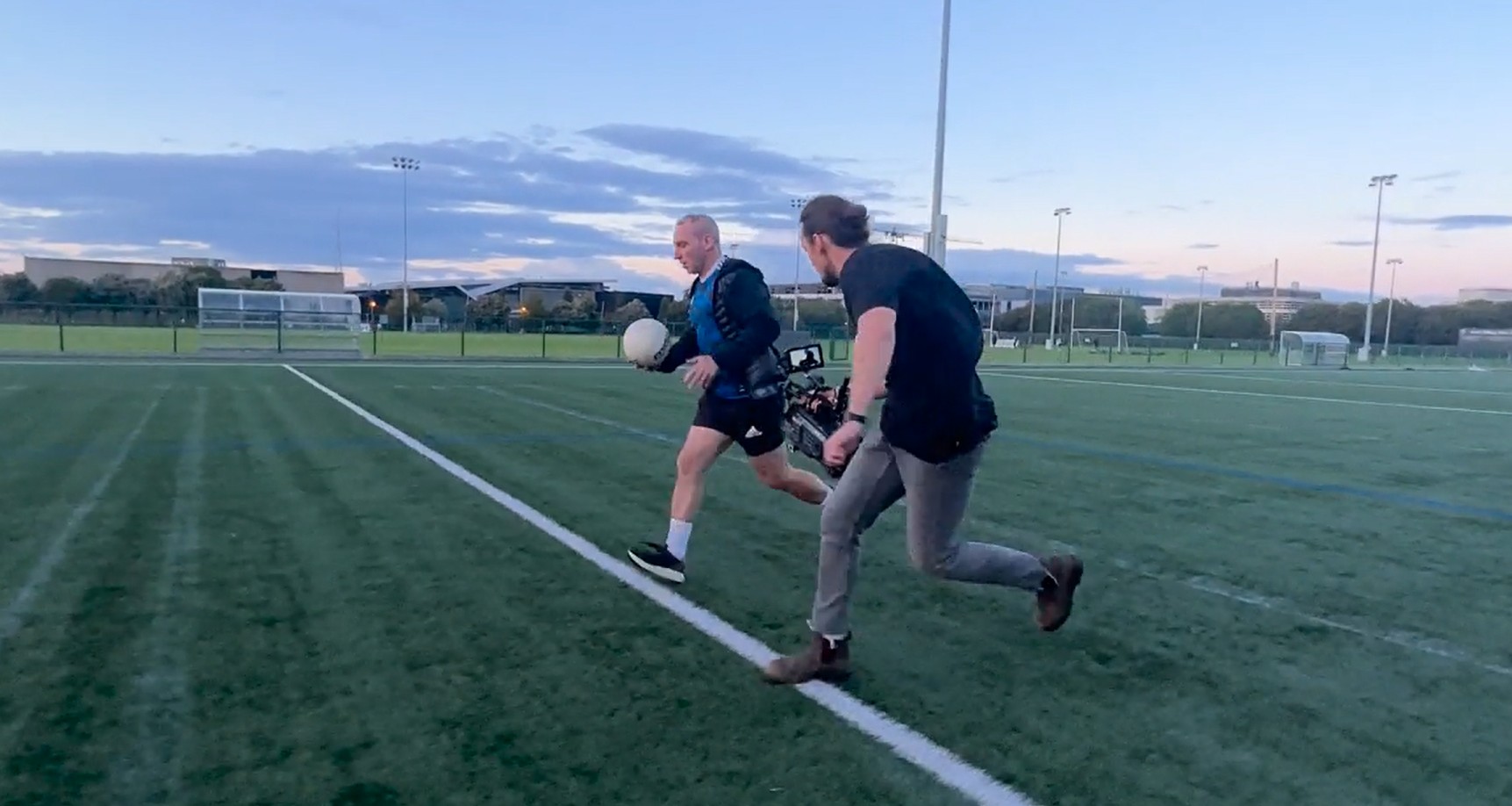
- Train Together (45 minutes). Take the team outdoors first thing in the morning for a brisk walk, an easy run or a simple bodyweight circuit, scaled so every fitness level can take part. Nobody gets left behind – that is the whole point. Nothing bonds people faster than working hard together and finishing together.
- Walk and Talk (20 minutes). In pairs, walk outside with one question: “What’s one thing I could do to help you perform better?” Moving side by side makes honest conversation easier than sitting across a table. It is a core part of our Performance & Wellbeing programmes for exactly that reason.
When a team has energy, it brings its best every single day.
Which team building activity should you start with?
Start with the area where your team is struggling most right now.
- New or changed a lot? Start with the Journey Line and the North Star Session.
- Friction or blame? Start with the Working Styles Exchange and the Team Charter.
- Struggling in busy periods? Start with the Pressure Test and the Pre-Mortem.
- Talking past each other? Start with the Constraint Challenge and Listen and Reflect.
- Tired or burnt out? Start with Train Together and Walk and Talk.
Planning a full team offsite? Combine three or four of these into one day, with a debrief after each.
The debrief: where the real team building happens
The debrief is the ten minutes after a team building activity where the team talks about what happened and what changes on Monday. Skip it and the activity was just entertainment. The best organisations we work with treat the review as seriously as the work itself, and research on team debriefs (Tannenbaum and Cerasoli, 2013) found they improve team performance by roughly 20 to 25 per cent.
Close every activity with three questions:
- What went well, and why?
- What did we learn about ourselves as a team?
- What is one thing we will do differently, starting this week?
Write the answers down and come back to them at your next team meeting.
Motivation without action quickly fades. Small improvements, repeated consistently, are what create lasting change.
when to bring in an outside facilitator
All 11 of these activities can be run by a leader inside the team. The challenge is that it is very hard to lead the session and take part in it at the same time. A leader’s voice also carries weight, so people are less likely to be fully honest.
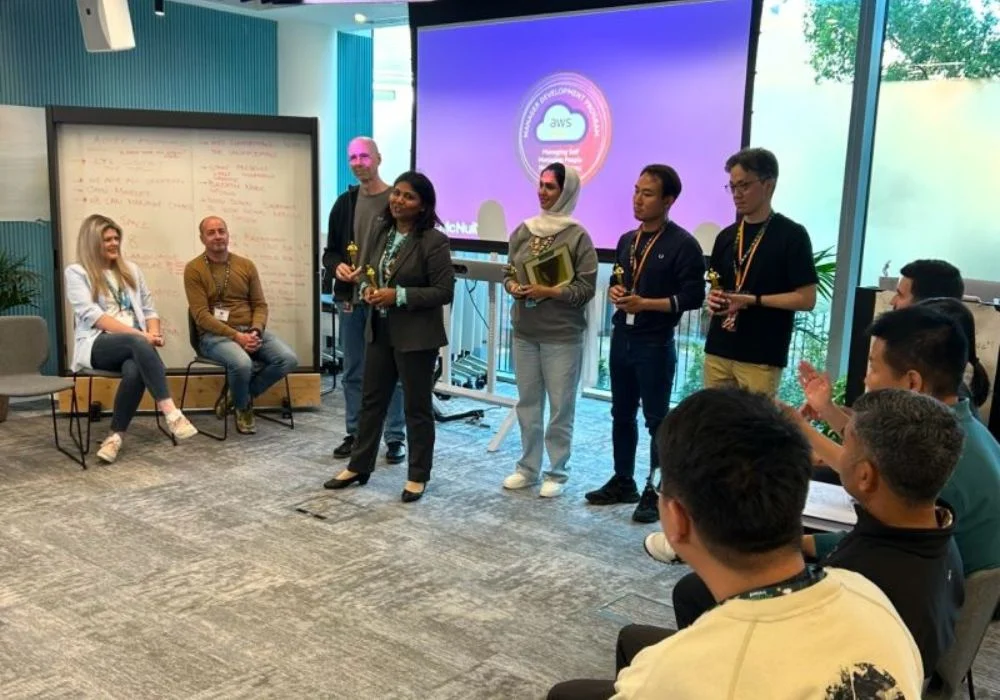
At McNulty, our coaching and facilitation team – drawn from business, leadership and the performance arts – designs and runs team building days, offsites and team bootcamps, in person and virtually. When we worked with Amazon Web Services leaders in APAC, we saw breakthroughs in just three days.
Your team doesn’t need another away day. It needs a reason to believe in each other. Pick one activity from this list and run it this month.
Our mission is your potential. Stronger trust. Clearer purpose. Lasting impact.
Ready to bring your team together?
Contact us to plan your team building day
Or call +353 1 535 2236, or email hello@mcnultyperformance.com.